Air movement and fan cycling are normal in convection cooking, but scraping, rattling, repeated start-stop noise, or a new vibration can indicate interference, fan/blade issues, motor wear, or mounting problems. This guide explains safe checks, diagnostic c...
Some convection and cooling fan sound is normal in a KitchenAid oven; scraping, rattling or a fan that runs long after cooking deserves attention. Empty the oven, seat the racks, and note which mode makes the noise, then book diagnosis if it persists.
Air movement and fan cycling are normal in convection cooking, but scraping, rattling, repeated start-stop noise, or a new vibration can indicate interference, fan/blade issues, motor wear, or mounting problems. A good troubleshooting process starts with the conditions you can verify safely, then stops before live electrical, gas, sealed refrigeration, microwave high-voltage, or protected mechanical work.
This guide focuses on KitchenAid convection fan making noise. If the appliance shows a specific diagnostic code, keep the code definition on the dedicated KitchenAid error-code pages and use this article for the operating context around that code.
Interference with the blade, fan or motor wear, and mounting problems can cause scraping or rattling. The cooling fan and convection fan are separate sources worth telling apart.
A technician would not treat these as interchangeable causes, but they are the main systems worth distinguishing:
These are diagnostic branches, not instructions to replace every item named above. The exact model and the appliance’s behavior determine which branch is plausible.
| What you hear | What it can point to | What you can safely check |
|---|---|---|
| Rattle that stops with an empty oven | A loose rack, pan or accessory | Remove items and seat racks fully |
| Sound during preheat or after cooking | Normal fan behavior | Compare against the manual |
| Scraping that continues or worsens | Fan clearance or bearing wear | Stop and schedule diagnosis |
Suppose you notice a new scraping or ticking sound appears only in convection mode. Then compare that with the oven vibrates more than before. If both happen together, the diagnostic picture is different from a one-time event after unusual use. Write down the sequence before changing settings or resetting power; the order of events can help reproduce the condition.
Try to describe KitchenAid convection fan making noise without naming a part. “Stops after ten minutes,” “only the top rack is dirty,” or “flow changed after the filter” is stronger evidence than “the board is bad.”
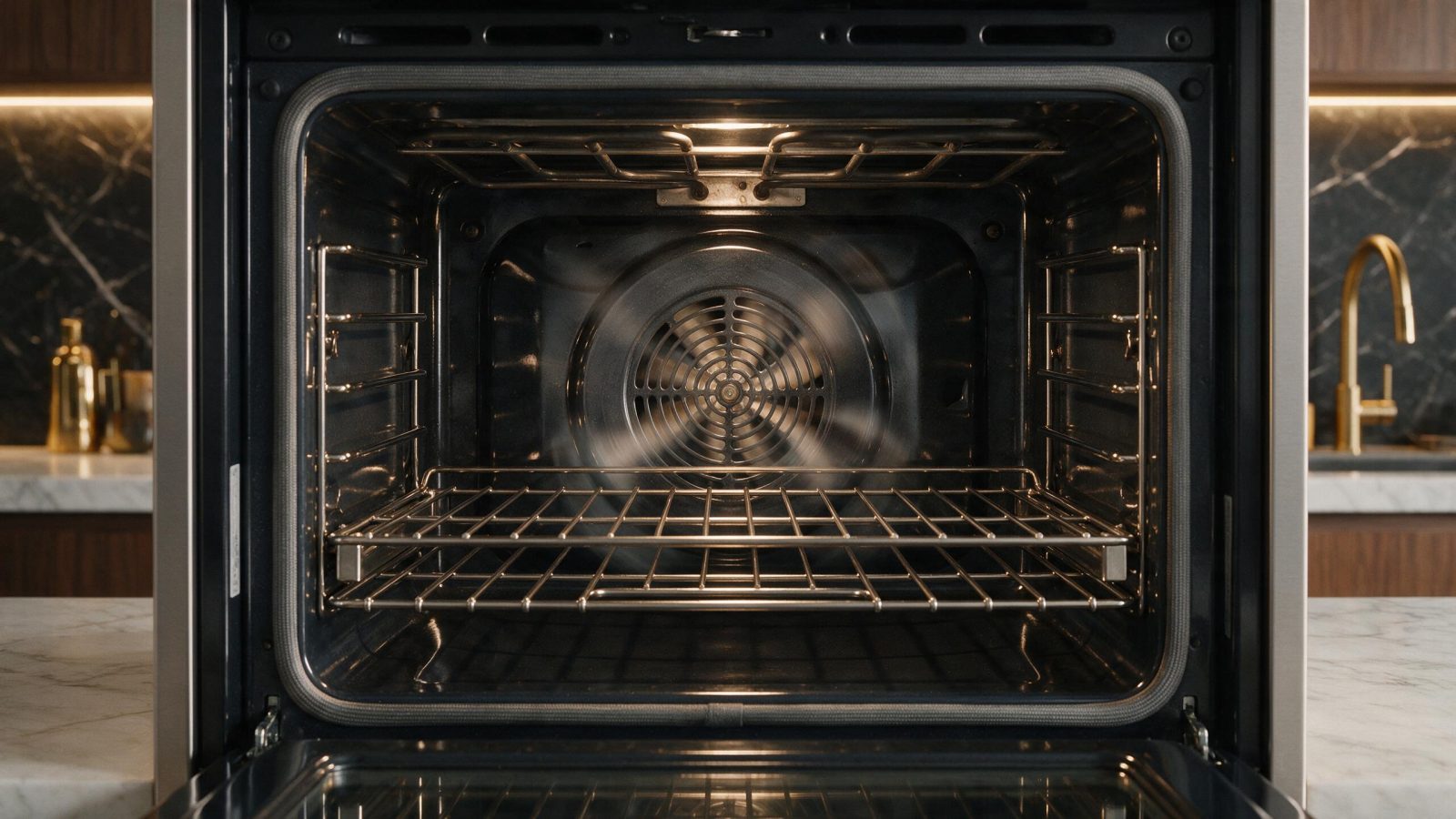
KitchenAid’s support material suggests a convection fan may cycle during preheat even in non-convection modes and stops when the door opens. If noise continues with the door open, it is likely the cooling fan, which runs after cooking depending on cavity temperature. Knowing which fan you are hearing makes the description more useful.
A short, disciplined check is more useful than repeated resets:
After an obvious external condition is corrected, use only the restart or acknowledgement procedure documented for the exact model. If the problem returns, stop repeating resets and preserve the evidence.
At this point, the technician should verify the affected system rather than order a part from the symptom alone.
A technician can inspect fan clearance, blade condition, motor bearings/mounting, wiring and control commands while distinguishing the convection fan from the separate cooling fan where fitted.
A diagnosis should confirm the affected system before a part is ordered. The display, sound, temperature, flame, water behavior, or cycle timing is evidence—not a parts invoice.
KitchenAid has used multiple platforms across refrigerators, dishwashers, ovens, ranges, cooktops, microwaves and specialty kitchen appliances. Two appliances can look similar while using different sensors, controls, component layouts or diagnostic maps.
Use the complete rating-label model number, including the suffix where present. Do not pull a heavy built-in appliance out of cabinetry or remove a protected panel just to find the label; use the owner’s documentation to locate the normal accessible rating-label position.
A model number is especially important when a code appears. It prevents a definition from another appliance family or control generation from being applied to the wrong machine.
Stop if the noise is accompanied by smoke, electrical odor, arcing, severe vibration, or a fan that appears physically damaged.
General stop conditions also apply: smoke, visible arcing, burning-electrical odor, persistent gas odor, repeated breaker trips, uncontrolled heating, active water reaching electrical parts, a damaged microwave door/interlock, or a mechanism that can move unexpectedly.
Do not open live electrical compartments, adjust gas piping or regulators, bypass safety switches, access microwave high-voltage systems, or open a sealed refrigeration circuit as a homeowner troubleshooting step.
A concise service request can save diagnostic time:
A useful service request includes three things: the full model number, the repeatable symptom, and a photo of any code or unusual condition.
No. Some causes are owner-accessible conditions, settings, loading, maintenance, installation, or normal operating behavior. The concern becomes more service-oriented when the pattern is repeatable after safe external checks.
The most useful clue is usually the repeatable pattern: a new scraping or ticking sound appears only in convection mode. Pair that observation with the full model number and any code or recent change.
Yes when the pattern is repeatable, affects performance, or is becoming more frequent. Record the conditions that trigger it; intermittent behavior can be valuable diagnostic evidence.
Not without diagnosis. A control can report a problem created by a sensor, switch, load, wiring, utility condition, or another module.
The fan may cycle during preheat in other modes. Check your manual to see how your model behaves.
Open the door: the convection fan stops, while a cooling fan keeps running if the oven is still hot.
Ovens cycle heat rather than hold one exact air temperature; the concern is persistent baking inconsistency or abnormal recovery, not every short-term thermometer swing.…
A problem isolated to one electric or induction zone narrows the search to cookware/zone compatibility, the local sensor or heating system, wiring, a power…
Cooling or ventilation fans can continue after cooking on some designs to remove heat; concern rises when the fan never shuts off, runs from…
Share a few details and we’ll confirm an appointment. Prefer to talk? Call us and we’ll help right away.
Use the secure scheduler below to request your appointment.