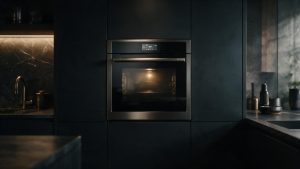
For the exact record already present on the KitchenAid site, use the current verified meaning stored with that record. Do not replace it with a meaning taken from another appliance family just because the display looks the same.
Reviewed by Liam Porter · Last reviewed August 11, 2026
Written by
Liam Porter Appliance Care EditorPublished September 2, 2026
Content status:
Verified
Error codeF63
ApplianceOven
Affected model seriesKitchenAid Whirlpool-platform controls with on-display diagnostics (model-dependent)
Quick answer
For the exact record already present on the KitchenAid site, use the current verified meaning stored with that record. Do not replace it with a meaning taken from another appliance family just because the display look…
Model compatibility: KitchenAid reuses codes across series and model years, so F63 may mean something different on another appliance or generation. Confirm this against your model’s documentation and record your full model number before acting.
Plain language
What this code means
F63 typically maps to oven f-code on KitchenAid wall ovens and ranges — confirm your control generation before ordering parts. Treat this as plain-language guidance for KitchenAid owners, not a substitute for model-specific service literature.
Signs
Symptoms you may notice
The oven displays F63 during operation
F63 appears without an obvious cause
The oven behaves inconsistently with F63 shown
Why it happens
Possible causes
A legitimate operating or status condition recognized by the control.
A sensor or switch signal outside the range expected by that model.
A harness or connector problem between a monitored component and the electronic control.
A motor, valve, heater, fan, latch, interface, or other load that is not responding as commanded — only when the current verified record points to that system.
A communication or control issue after connected circuits have been checked.
An installation, airflow, water-flow, door-closure, cookware, detergent, or maintenance condition where the owner's documentation identifies an external cause.
Before you call
Safe checks you can make
These are simple, non-hazardous checks only. If anything is unclear, stop and contact a technician.
Confirm the appliance has stable power
Check for visible blockages or obstructions
Record the full model number
Photograph the display and rating label so an independent tech can match the code to your model
Important safety warning. Do not attempt repairs involving electrical components, gas, water lines, refrigerant or sealed systems. Unplug the appliance if it is safe to reach the outlet, and leave internal diagnostics to a qualified technician.
Please avoid
What not to attempt
Do not open internal panels or access high-voltage components
Do not bypass door locks, safety switches or interlocks
Do not adjust, disconnect or repair any gas connection or valve
Get help
When to call a technician
If the display comes back after safe, owner-accessible checks, schedule independent KitchenAid appliance diagnosis. Provide the complete model number, a photo of the display, and a short description of what the appliance was doing when F63 appeared.
Seeing this code on your KitchenAid appliance?
Book a specialist visit for a clear estimate and approval before any repair. Independent service — not an official KitchenAid service center.
For the exact record already present on the KitchenAid site, use the current verified meaning stored with that record. Do not replace it with a meaning taken from another appliance family just because the display look…
For the exact record already present on the KitchenAid site, use the current verified meaning stored with that record. Do not replace it with a meaning taken from another appliance family just because the display look…
No. Shared code strings and similar display formats can map differently by appliance and control generation. Always match the code to the exact appliance and full model number.
You can correct an obvious external condition and use the normal owner-approved restart or acknowledgement procedure for the exact model. If the display returns, repeated resetting is not a repair.
Not by itself. The current verified meaning identifies the diagnostic path, and model-specific testing should confirm the failed component before parts are ordered.
Only when the condition is clearly a normal status/maintenance indication and operation is normal. Stop for electrical, fire, gas, uncontrolled-heat, active-leak, or significant refrigeration-safety concerns.