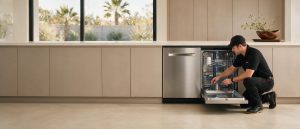
For the KitchenAid dishwasher record covered here, H2O is associated with no water detected / fill problem. This wording should be read narrowly: it describes the system or condition the control is reporting, not a guaranteed failed part.
Reviewed by Liam Porter · Last reviewed August 11, 2026
Written by
Liam Porter Appliance Care EditorPublished September 2, 2026
Content status:
Verified
Error codeH2O
ApplianceDishwasher
Affected model seriesKitchenAid refrigerators, laundry, cooking, and dishwashing controls that show service codes
Quick answer
For the KitchenAid dishwasher record covered here, H2O is associated with no water detected / fill problem. This wording should be read narrowly: it describes the system or condition the control is reporting, not a gu…
Model compatibility: KitchenAid reuses codes across series and model years, so H2O may mean something different on another appliance or generation. Confirm this against your model’s documentation and record your full model number before acting.
Plain language
What this code means
Not detecting water — open the supply, unkink the inlet hose, then restart. Artisan Repair uses the code as a starting clue; final diagnosis still follows your appliance’s documentation.
Signs
Symptoms you may notice
The appliance may pause because expected water flow is not detected.
Filling can be slow, intermittent, or absent.
The display may return soon after a new cycle begins.
Why it happens
Possible causes
A closed or restricted water supply.
A kinked inlet hose or blocked inlet screen where user-accessible.
An internal inlet valve, flow-sensing, wiring, or control problem.
Before you call
Safe checks you can make
These are simple, non-hazardous checks only. If anything is unclear, stop and contact a technician.
Confirm the water supply tap is fully open
Check the inlet hose for kinks
Perform a manufacturer-approved restart
Write down when H2O appeared and which cycle or mode was running
Important safety warning. Do not attempt repairs involving electrical components, gas, water lines, refrigerant or sealed systems. Unplug the appliance if it is safe to reach the outlet, and leave internal diagnostics to a qualified technician.
Please avoid
What not to attempt
Do not open internal panels or access high-voltage components
Do not bypass door locks, safety switches or interlocks
Get help
When to call a technician
If the safe checks do not resolve the condition, schedule an independent KitchenAid appliance diagnosis. Provide the full model number and a photo of the H2O display so the technician can start with the correct model-specific code map.
Seeing this code on your KitchenAid appliance?
Book a specialist visit for a clear estimate and approval before any repair. Independent service — not an official KitchenAid service center.
For the KitchenAid dishwasher record covered here, 1C1C is associated with model-dependent dishwasher diagnostic code. This wording should be read narrowly: it describes the system or condition the control is reportin…
For the KitchenAid dishwasher record covered here, F10E4 is associated with overflow condition. This wording should be read narrowly: it describes the system or condition the control is reporting, not a guaranteed fai…
For the KitchenAid dishwasher record covered here, F10E5 is associated with overflow condition. This wording should be read narrowly: it describes the system or condition the control is reporting, not a guaranteed fai…
For the record covered by this page, H2O relates to no water detected / fill problem. Confirm the exact definition against the full model number before ordering parts or authorizing an internal repair.
You can correct an obvious external condition and use the normal owner-approved restart or acknowledgement procedure. If the same code returns, clearing the display again does not repair the cause.
Only if the condition is clearly a normal status/maintenance indication and the appliance is operating normally. Stop using it for smoke, burning odor, arcing, repeated breaker trips, uncontrolled heating, gas odor, active leakage near electrical parts, or a significant loss of refrigeration.
No. The code identifies a condition or diagnostic path. Model-specific testing should confirm the failed component before parts are ordered.